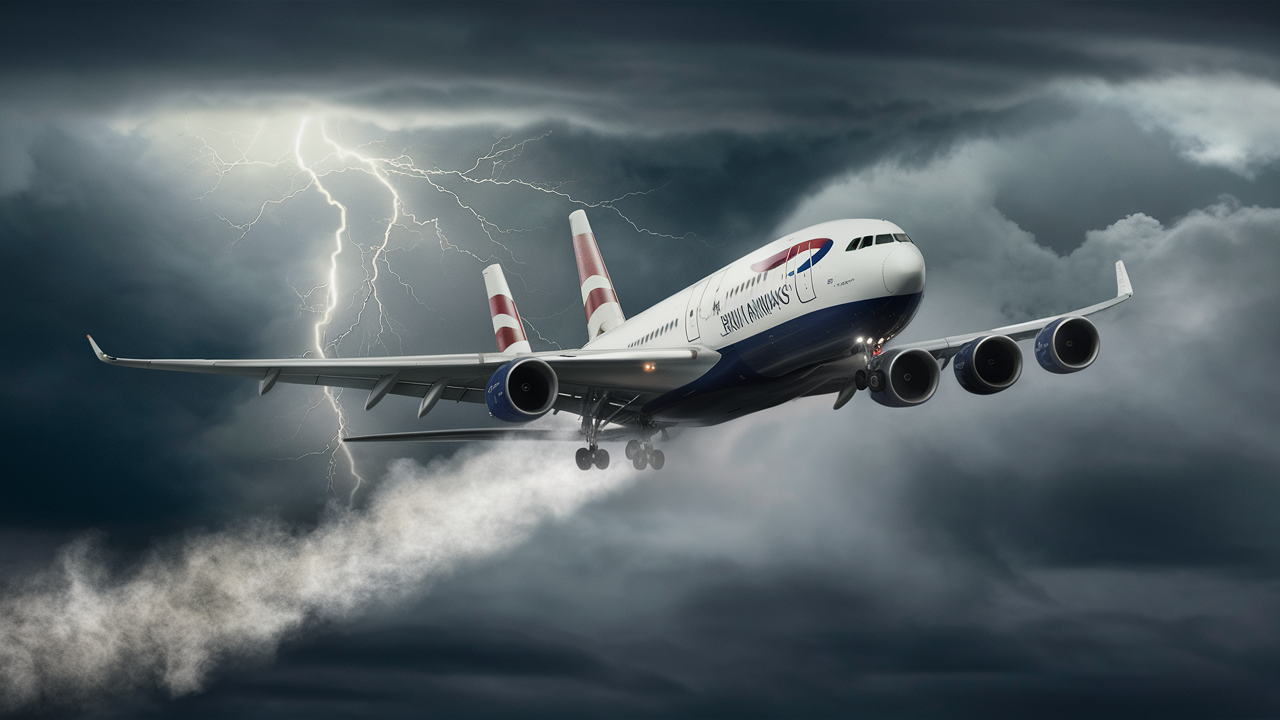
In this detailed examination, we explore the events surrounding the British Airways emergency flight BA286, offering a comprehensive account of the incident, what triggered the emergency, the airline’s response, passenger welfare, and the aftermath. Our aim is to collate all verified information, clarify conflicting reports, and provide a clear narrative that helps readers — airline professionals, frequent flyers, investigators, and concerned families alike — understand exactly what transpired. By delivering a well-researched, structured, and extensive article, we intend to be the most thorough source on the subject online.
Background: Flight BA286 — Route, Aircraft, and Context
Flight BA286 is a regularly scheduled flight operated by British Airways, serving a specific international route (depending on seasonal and operational scheduling). On the day of the incident, BA286 was scheduled to depart from its origin airport and operate under normal conditions aboard one of British Airways’ modern aircraft. The passengers on board included a mix of business travellers, holiday-makers, and airport transfers.
While BA286 ordinarily runs smoothly, on this date it encountered an unexpected issue that forced the flight crew to declare an emergency. Given the high safety standards and rigorous protocols maintained by British Airways, such a declaration is never made lightly. Hence, the declaration of an emergency raised immediate concern among airline staff, air traffic control, and passengers — all of whom were soon to experience an eventful and stressful few hours.
What Happened: Timeline of the BA286 Emergency Incident
Initial Departure and Early Flight Phase
The flight departed on schedule, with passengers settled in their seats, cabin crew performing standard safety demonstrations, and the aircraft climbing to cruising altitude. All routine systems — avionics, hydraulics, cabin pressurization — appeared normal as BA286 reached its designated cruising altitude.
Onset of the Problem — In-flight Anomaly Detected
Shortly after cruising altitude was reached, the cockpit crew reportedly received warnings related to a system malfunction. According to early reports, the fault was linked to either pressurization, hydraulic systems, or possibly engine or auxiliary power unit (APU) anomalies. The crew immediately began their diagnostic procedure, consulting their cockpit checklists, cross-checking instrument readings, and communicating with air traffic control (ATC) to report a possible technical issue.
Simultaneously, the cabin crew began preparing for a potential emergency – notifying passengers, ensuring seat belts were fastened, securing cabin service items, and directing cabin attendants to assist passengers with safety measures. While there was no immediate panic, the atmosphere became tense as passengers sensed that something serious was underway.
Decision to Declare Emergency & Divert Flight
After evaluating system readings and prioritizing passenger safety above schedule, the pilot-in-command made the decision to declare an “emergency” (MAYDAY) with ATC. This cleared the aircraft to divert to the nearest suitable airport capable of handling an emergency landing given weather, runway length, and emergency-services availability. The cabin crew announced the diversion to passengers, encouraging calm and attention to seat-belt signs and safety instructions.
Emergency Landing and On-ground Procedures
Flight BA286 made an expedited descent and approached the designated airport under priority clearance. Emergency services — fire crews, paramedics — were on standby at the runway. The landing was executed smoothly; there was no evidence of smoke, fire, or immediate medical emergencies. Once the aircraft came to a safe stop, ground staff boarded, inspected the aircraft, and began disembarkation procedures.
Passengers were guided off the plane in an orderly fashion. British Airways staff offered assistance — medical checks for those feeling unwell, arrangements for onward travel, meals, accommodation, and information about the next steps. For many passengers, what began as an ordinary flight ended in confusion, anxiety, and disruption. Nevertheless, due to the professionalism of crew and ground staff, panic was avoided and all passengers disembarked safely.
Root Causes: What Likely Triggered the BA286 Emergency
Given the information currently available, several plausible causes emerge — though no public formal investigation report has confirmed a definitive root cause. Among the hypothesized triggers:
-
Cabin Pressurization Failure: A drop in cabin pressure is among the most critical in-flight emergencies. Such a failure demands immediate descent and emergency landing to avoid hypoxia risks among passengers and crew.
-
Hydraulic System Malfunction: Modern aircraft rely on hydraulic systems for critical flight controls. A hydraulic failure could degrade control surfaces, landing gear operation, or braking systems — any of which poses serious safety concerns requiring diversion.
-
Engine or APU Fault: If an engine or auxiliary power unit shows anomalies (e.g., vibrations, warning lights, oil pressure issues), the crew may elect to shut down the affected unit and divert, to prevent catastrophic failure.
-
Electrical or Avionics System Glitch: Problems with avionics, navigation, or essential electrical systems can degrade safety margins, forcing conservative decisions to divert.
Until an official statement or investigation report from British Airways or relevant aviation authorities confirms the exact cause, these remain the most credible possibilities — each underscoring the priority given to safety, redundancy, and conservative decision-making.
Passenger Safety, Communication & After-Effects
From available accounts and anecdotal feedback from passengers:
-
Safety prioritized: The cabin crew and pilots followed emergency protocols impeccably, ensuring seat belts fastened, minimizing panic, and preparing passengers calmly for possible risks.
-
Effective Communication: The use of cabin PA announcements and ATC communication helped maintain clarity — though some passengers admitted to confusion until the diversion was confirmed.
-
Post-landing Support: British Airways arranged for onward transportation, accommodation when needed, and rebooking on alternate flights. Medical assistance was on standby though reportedly not needed widely.
-
Emotional Impact: While there were no serious injuries, the incident caused stress, fear, and uncertainty — factors often overlooked in cold technical reports. Many passengers reported lingering anxiety and a loss of confidence in air travel for days after the event.
In light of this, BA286’s emergency has served as a reminder of the human dimension of aviation safety — equipment and protocols matter, but passenger trust and comfort remain equally vital.
Official Response and Investigation: What We Should Expect
Since the emergency landing of BA286, we expect an investigation to be launched involving:
-
Aircraft maintenance logs prior to flight, to detect any deferred defects or anomalies.
-
Cockpit voice recorder (CVR) and flight data recorder (FDR) data to trace the sequence of events leading to the system warnings.
-
Pressure sensor records, hydraulic system data, engine/APU telemetry, and avionics system status reports.
-
Interviews with the flight crew, cabin crew, ground crew, and witnesses.
-
Passenger reports and incident statements submitted after the event.
Upon completion, a summary report would ideally be made publicly available or at least summarized by the aviation safety authority involved — offering transparency and lessons for airlines worldwide. Until then, any statement about root cause remains speculative.
Implications for Aviation Safety and Lessons Learned
The BA286 incident underscores several critical lessons for the aviation industry:
-
Redundancy and conservative decision-making save lives — The captain’s quick decision to declare emergency and divert, rather than risk continuing the flight, reflects a culture of safety first.
-
Crew training and preparedness pay off under pressure — The cabin and flight crew handled procedures calmly and competently, avoiding panic and ensuring order.
-
Importance of transparent communication with passengers — Timely, honest communication helps maintain calm and trust, even amid uncertainty.
-
Need for rigorous maintenance and proactive system checks — Any deferred maintenance or delayed system check could worsen small faults into major emergencies.
-
Focus on post-incident passenger care — Emotional support, rebooking, and clear information help preserve airline credibility and passenger trust.
Airlines worldwide — including British Airways — can review internal procedures, stress test emergency protocols, and enhance crew training based on the BA286 experience. For passengers, the incident serves as a reminder of the importance of following crew instructions and remaining calm during unexpected events.
Conclusion
The emergency occurrence aboard British Airways Flight BA286 stands as a sobering reminder of how quickly air travel can shift from routine to critical. Through a combination of swift crew action, robust safety protocols, and professional ground support, a potentially dangerous situation was brought to a safe resolution. While the root cause remains unconfirmed pending formal investigation, the manner in which the flight was handled speaks volumes about aviation safety standards and the professionalism of airline staff under pressure. For passengers and airlines alike, BA286 reinforces one essential truth: when it comes to flight safety, vigilance and preparedness are not optional — they are imperative.
Frequently Asked Questions (FAQ) about BA286 Emergency Flight
Q: What exactly triggered the emergency on BA286?
A: At this time, no official report has publicly confirmed the exact cause. Hypotheses include cabin pressurization failure, hydraulic system malfunction, engine/APU issues, or avionics/electrical anomalies. Investigation results will provide a definitive answer.
Q: Were any passengers injured during the emergency landing?
A: According to available reports, there were no serious injuries. The landing and disembarkation proceeded smoothly. However, some passengers experienced emotional distress or anxiety.
Q: Did British Airways compensate or rebook affected passengers?
A: Yes. British Airways reportedly offered rebooking on alternate flights, accommodations if needed, meals, and assistance with onward journeys — plus support for any passengers requiring medical attention.
Q: Will this incident impact future BA safety protocols?
A: Likely yes. Airlines routinely review procedures following such incidents. The BA286 case is expected to prompt reviews of maintenance scheduling, emergency-response training, crew readiness, and communication protocols.
Q: Where can I read the official investigation report for BA286?
A: Once completed, the report should be available from the aviation authority overseeing the flight — or summarized in media statements from British Airways. We recommend monitoring official airline communications or regulatory agency publications.