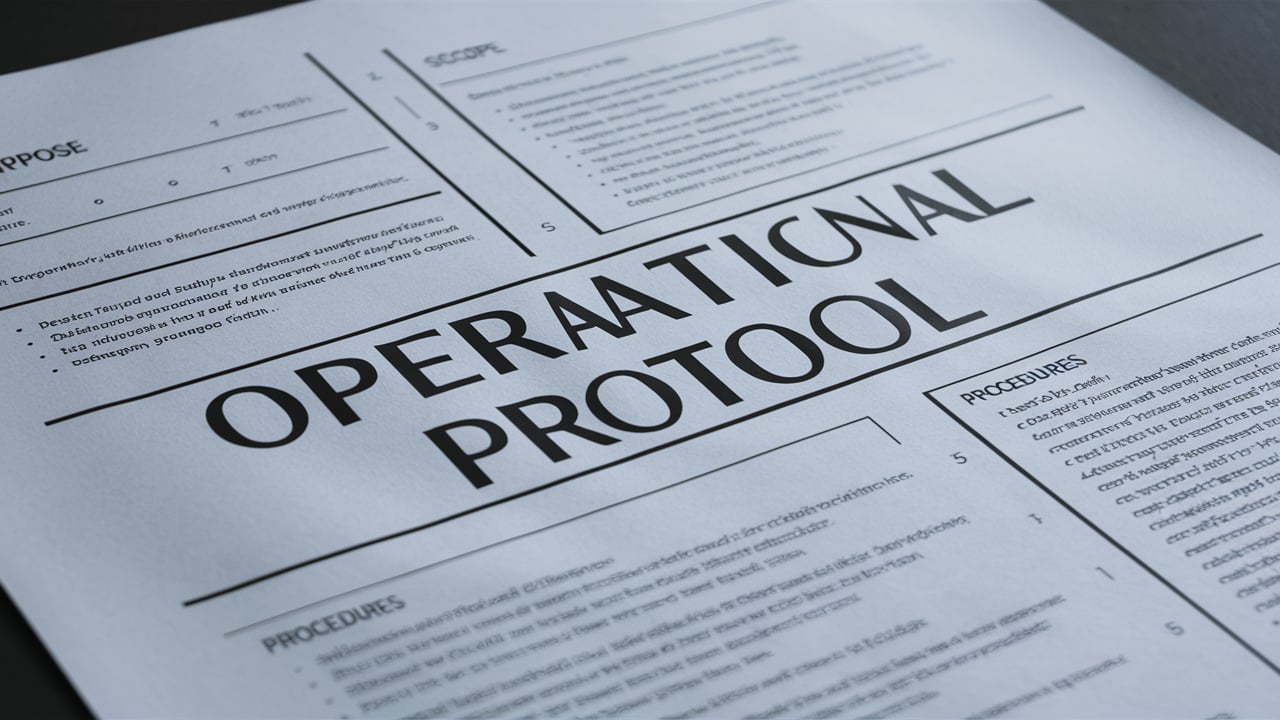
A Protocolo Operacional Padrão (POP), also known in English as a Standard Operating Procedure (SOP), is a foundational tool for businesses and organizations that aim to operate with consistency, efficiency, and quality. Whether used in healthcare, manufacturing, laboratories, hospitality, logistics, government processes, or corporate environments, a well-structured POP ensures that every task follows a uniform standard that minimizes errors and maximizes productivity. As companies grow and operations become more complex, the need for formal, documented, and optimized procedures becomes essential. This comprehensive guide explains what a Protocolo Operacional Padrão is, why organizations depend on it, how it improves workflow, and how to create POPs that are clear, complete, and effective.
Understanding the Protocolo Operacional Padrão (POP)
A Protocolo Operacional Padrão is a formal document that describes a step-by-step workflow to ensure that a specific task is performed correctly and consistently. It is used to standardize processes so that regardless of who performs the task, the result remains reliable, safe, and aligned with organizational objectives. POPs are indispensable in industries where precision, reproducibility, and compliance are required, such as healthcare procedures, laboratory testing, manufacturing lines, food handling, and administrative routines. A well-designed POP reduces errors, simplifies training, and creates a clear reference for workers, supervisors, and auditors.
Why Every Organization Needs a Protocolo Operacional Padrão
Organizations that fail to document their operational processes often face unnecessary variability, inefficiency, and miscommunication. A properly executed Protocolo Operacional Padrão establishes a unified method, eliminating improvisation and ensuring that team members know exactly what to do and how to do it. This standardized approach improves operational quality, increases employee confidence, and strengthens compliance with internal policies and external regulations. Furthermore, POPs promote operational continuity by preventing workflow disruptions when staff rotate, resign, or take leave. The ability to maintain consistent standards also enhances customer satisfaction and builds trust in the organization’s services.
Key Components of an Effective Protocolo Operacional Padrão
Creating a clear and functional POP requires attention to structure. A Protocolo Operacional Padrão typically includes identifiable sections that help workers quickly understand the objective, responsibilities, steps, equipment, risks, and outcomes. Essential components often include:
-
Title and Identification Code
A unique label that allows easy organization and retrieval. -
Objective of the POP
A description of the procedure’s purpose and expected results. -
Scope
Defines where and when the POP applies and which team members are involved. -
Roles and Responsibilities
Clearly outlines who performs each step and who oversees the procedure. -
Required Materials and Equipment
Ensures readiness before the process starts. -
Step-by-Step Instructions
The core section detailing tasks in logical order with enough clarity to avoid ambiguity. -
Safety Considerations
Addresses risks, precautions, and protective measures. -
Quality Control and Performance Indicators
Ensures the process meets minimum quality requirements. -
Documentation and Records
Identifies what must be reported, logged, or approved throughout the procedure.
This structure creates a full, organized workflow that employees can follow without guesswork.
How to Create a Protocolo Operacional Padrão from Scratch
Developing an effective Protocolo Operacional Padrão begins with observing and documenting how tasks are carried out in real conditions. The process usually includes interviewing experienced staff, identifying the most efficient methods, and analyzing risks that might arise. Once information is collected, the next step is to translate it into a clear and detailed document using simple, direct language. Procedures must be written with logical sequencing, avoiding unnecessary technical jargon unless the audience is specialized. After drafting, the POP should undergo review by supervisors, quality teams, and safety officers to ensure accuracy. Finally, training employees on the new POP is essential so that the entire team adopts the standard.
Benefits of Implementing Protocolo Operacional Padrão Across Departments
When properly implemented, a Protocolo Operacional Padrão brings numerous organizational benefits. It significantly reduces process variability, allowing teams to deliver consistent results regardless of who performs the task. It strengthens quality assurance by offering documented proof of compliance, which is crucial for audits, certifications, and regulatory assessments. POPs also reduce training complexity because new employees can quickly understand essential tasks without depending solely on verbal guidance. Additionally, the clarity provided by POPs helps prevent workplace accidents, procedural errors, and waste of resources. With increased productivity and reliability, POPs contribute directly to organizational efficiency and long-term sustainability.
Common Mistakes When Creating a Protocolo Operacional Padrão
Many organizations struggle with creating useful POPs due to lack of clarity, outdated information, or overly complex instructions. One of the most frequent errors is developing procedures with unnecessary details that confuse employees rather than help them. Another common mistake is failing to update POPs regularly, which may lead to operational inconsistencies when equipment changes or new regulations arise. Organizations also sometimes distribute POPs without offering proper training, leading to poor adoption. Ensuring that procedures remain practical, accessible, and routinely reviewed is essential for their success.
How to Maintain and Update a Protocolo Operacional Padrão
A Protocolo Operacional Padrão is not a static document; it evolves alongside organizational growth, technological updates, and process improvements. To maintain effectiveness, POPs should undergo periodic reviews — quarterly, semiannual, or annual — depending on industry demands. During reviews, leaders should assess workflow efficiency, verify compliance, check for outdated steps, and collect feedback from employees who use the POP daily. Updates must be formally approved, communicated, and trained so that all staff follow the revised standard. This proactive approach ensures that POPs remain relevant and beneficial while supporting continuous process improvement.
Conclusion
The Protocolo Operacional Padrão is an indispensable tool for organizations that value quality, efficiency, and consistency. By outlining clear procedures, reducing variability, ensuring regulatory compliance, and enabling smooth training, POPs empower companies to operate more effectively. Whether applied in industrial settings, administrative environments, laboratories, or service operations, POPs create a structured foundation that improves workflow reliability and minimizes errors. As businesses face increasing demands for transparency and performance, having well-developed and regularly updated POPs is not only beneficial but essential. A strong commitment to procedural standardization leads to safer operations, more competent teams, and higher levels of organizational excellence.
FAQ
1. What is a Protocolo Operacional Padrão (POP)?
A POP is a standardized procedure that describes the steps needed to perform a specific task consistently and accurately.
2. Why are POPs important?
They improve efficiency, ensure quality, reduce errors, enhance training, and support compliance with regulations.
3. Who creates a POP?
Supervisors, managers, quality professionals, and experienced employees often collaborate to create POPs based on best practices.
4. How often should a POP be updated?
Ideally every 6–12 months, or whenever equipment, regulations, or processes change.
5. What industries use POPs?
Healthcare, manufacturing, logistics, laboratories, food processing, government agencies, corporate departments, and more.